


Cough Relief (H) is a traditional Chinese herbal formula designed to support dry or irritating cough, itchy or irritated throat, white phlegm, healthy Lung function, respiratory comfort, and the normal movement of Lung Qi.
In Traditional Chinese Medicine (TCM), this cough pattern may develop when external Wind-Cold affects the Lung and interferes with its natural ability to disperse and descend Qi. Individuals may experience a dry or irritating cough, itchy throat, white phlegm, mild chills, sensitivity to cold or wind, nasal congestion, chest discomfort, or difficulty clearing mucus.
Cough Relief (H) is traditionally used to release the exterior, disperse Wind-Cold, support the Lung, promote the descending movement of Lung Qi, transform Phlegm, and soothe throat irritation. The herbs have a predominantly warming nature and are traditionally selected when cough and throat discomfort occur with Wind-Cold and white Phlegm rather than pronounced Lung Yin deficiency.
This formula is commonly chosen by individuals seeking traditional herbal support for early-stage cough, irritated or itchy throat, white phlegm, sensitivity to cold or wind, seasonal respiratory discomfort, and temporary disruption of normal Lung Qi.*
For individuals experiencing recurring cough, seasonal respiratory discomfort, allergies, weak digestion, frequent respiratory challenges, or constitutional depletion, Cough Relief (H) may be paired with Spleen Support, Immune Booster, Allergy Relief, or Kidney Support Yin according to the individual’s TCM pattern.
In Traditional Chinese Medicine, healthy respiratory function depends on the coordinated function of the Lung, Spleen, Kidney, and defensive Qi (Wei Qi). Additional formulas may therefore be selected when digestive weakness, allergies, weakened defensive Qi, or Yin deficiency contributes to recurring respiratory imbalance.
Spleen Support may be considered when coughing or Phlegm occurs with weak digestion, bloating, loose stools, fatigue, heaviness, or Dampness. Supporting Spleen and Stomach Qi helps the body transform food and fluids and reduces the tendency toward Dampness and Phlegm accumulation.*
Immune Booster may be considered when respiratory concerns occur with low energy, sensitivity to seasonal changes, frequent respiratory challenges, or weakened defensive Qi. It traditionally supports Lung Qi, Wei Qi, vitality, and the body’s natural defenses.*
Allergy Relief may be considered when coughing or throat irritation occurs with sneezing, runny nose, itchy or watery eyes, nasal congestion, sinus discomfort, environmental sensitivity, or excessive mucus. It supports healthy Lung and upper respiratory function during seasonal changes.*
Kidney Support Yin may be considered when recurring cough occurs with pronounced dryness, dry throat, night sweating, internal warmth, or long-term Yin deficiency. Because Cough Relief (H) is a warming formula, the appropriate combination depends on whether Wind-Cold remains present or deeper Yin deficiency is contributing to the recurring pattern.*
Together, these formulas provide broader TCM support for Lung Qi, defensive Qi, digestion, fluid transformation, seasonal wellness, respiratory comfort, and constitutional balance. The appropriate combination depends on the individual’s underlying Traditional Chinese Medicine pattern.*
Non-GMO | Gluten-Free | No refined sugar, corn, or dairy | No artificial colors, flavors, preservatives, chemical binders, or wax
100% Pure all natural herbs, blended, made, and packaged in the USA
Cough Relief (H) is traditionally used to support dry or irritating cough, itchy throat, sore throat, and respiratory discomfort associated with Wind-Cold patterns. The formula helps maintain throat comfort while supporting healthy Lung function and normal respiratory balance.
In Traditional Chinese Medicine, the Lung governs respiration and is responsible for dispersing and descending Qi. This formula traditionally supports healthy Lung function and the normal movement of Lung Qi when Wind-Cold interferes with comfortable breathing.
Cold Phlegm may obstruct the Lung and contribute to coughing, white mucus, chest congestion, and difficulty clearing the respiratory passages. This formula is traditionally used to transform Cold Phlegm, support healthy expectoration, and maintain normal mucus balance.
Exposure to cold air, wind, or sudden seasonal changes may disrupt Lung Qi and contribute to cough, chills, throat irritation, and white phlegm. The warming herbs in this formula are traditionally combined to disperse Wind-Cold and restore respiratory comfort.
Throat itchiness or irritation may trigger repeated coughing during the early stages of a Wind-Cold respiratory pattern. Cough Relief (H) traditionally supports throat comfort while helping calm the irritation associated with occasional coughing.
Healthy breathing depends on the Lung’s ability to disperse and descend Qi properly. This formula traditionally supports comfortable breathing by promoting normal Lung Qi movement and helping clear Phlegm that may contribute to chest or respiratory discomfort.
Cold weather, wind, air conditioning, and seasonal transitions may temporarily affect Lung and throat comfort. This formula is traditionally used during these periods to support respiratory wellness, healthy Lung Qi, and the body’s response to environmental changes.
Cough, white phlegm, throat irritation, or sensitivity to cold may remain after the initial Wind-Cold pattern begins improving. This formula traditionally supports the Lung’s natural recovery process and helps restore normal respiratory function and comfort.
Maintaining healthy Lung Qi, balanced mucus production, throat comfort, and clear respiratory passages is important for long-term wellness. Cough Relief (H) is traditionally used to support these functions while promoting comfortable breathing and overall respiratory balance.
Individual results may vary. Improvement may develop gradually as Lung Qi.
Cough Relief (H) is most appropriate for Traditional Chinese Medicine patterns involving Wind-Cold affecting the Lung, Cold Phlegm, white mucus, and disruption of the normal dispersing and descending movement of Lung Qi. Different individuals may experience different combinations of the following signs:
Individuals may experience a dry, irritating cough accompanied by throat itchiness, scratchiness, or mild discomfort. Throat irritation may repeatedly trigger coughing even when little mucus is produced.
A sore, dry, or uncomfortable throat may develop during the early stages of a Wind-Cold respiratory pattern. The throat may feel rough or irritated when talking, swallowing, or coughing.
Cold Phlegm is commonly associated with white, clear, or thin mucus according to Traditional Chinese Medicine. Individuals may cough or clear their throat frequently but still feel that mucus remains in the respiratory passages.
Coughing may begin or worsen after exposure to cold weather, wind, rain, air conditioning, or sudden temperature changes. These environmental factors may interfere with the Lung’s normal ability to disperse and descend Qi.
Some individuals may experience mild chills, cold sensitivity, body discomfort, or a preference for warmth. These signs may occur together with coughing, white phlegm, nasal congestion, or throat irritation during a Wind-Cold pattern.
Wind-Cold may contribute to mild nasal congestion, sneezing, throat irritation, or discomfort affecting the upper respiratory passages. These symptoms may occur alongside a dry or mildly productive cough.
Individuals may notice mild chest fullness, congestion, or a sensation that mucus remains in the chest. This pattern may occur when Cold Phlegm obstructs the Lung and interferes with the normal movement of Lung Qi.
A dry or mildly productive cough may continue after other seasonal symptoms begin improving. In TCM, this may indicate that Wind-Cold or Phlegm remains and normal Lung Qi movement has not yet been fully restored.
Cold weather, wind exposure, air conditioning, or rapid seasonal transitions may temporarily increase coughing, throat sensitivity, white mucus, or respiratory discomfort. Individuals with weakened Lung Qi may notice that these patterns return when the weather changes.
Cough Relief (H) is most appropriate when these signs correspond with Wind-Cold, Cold Phlegm, and obstructed Lung Qi. More persistent or recurring respiratory patterns may require additional traditional herbal support according to the individual’s underlying Traditional Chinese Medicine pattern.
According to Traditional Chinese Medicine (TCM), healthy Lung function depends on the proper movement of Lung Qi, balanced fluid metabolism, strong defensive Qi, and healthy Spleen function. Wind-Cold, Cold Phlegm, weak digestion, environmental irritants, and sudden weather changes may contribute to dry or irritating cough, itchy throat, white mucus, and respiratory discomfort.
For best results while using Cough Relief (H):
Individuals with Wind-Cold cough, Cold Phlegm, or throat irritation may benefit from limiting:
Warm soups, rice porridge, ginger, scallions, garlic, cooked vegetables, steamed apples, cooked pears, whole grains, mushrooms, and small amounts of honey when appropriate may support Lung and throat comfort.
From a TCM perspective, warm and freshly prepared foods help protect Spleen and Stomach function while supporting the production of Qi. Ginger, scallions, and warm soups are traditionally selected during Wind-Cold patterns, while cooked pears, steamed apples, and honey may help maintain throat moisture without relying on excessive cold or raw foods.
Traditional Chinese Medicine views the Lung and Spleen as closely connected. The Spleen transforms food and fluids into Qi, while the Lung disperses Qi, regulates respiration, and helps circulate defensive Qi throughout the body.
Consistent hydration, warm meals, healthy digestion, adequate sleep, regular movement, protection from cold and wind, and reduced exposure to respiratory irritants can complement a traditional Chinese herbal wellness routine and support comfortable breathing, throat health, balanced mucus production, and long-term respiratory wellness.
Cough Relief (H) contains a carefully selected combination of traditional Chinese herbs that work together to support healthy Lung function, soothe dry and irritated throats, promote respiratory comfort, and maintain healthy Qi circulation.
Traditionally used to support Lung health, soothe the throat, and promote the healthy movement of Lung Qi. Platycodon Root has long been used in Traditional Chinese Medicine to support respiratory comfort and maintain healthy throat function.
Traditionally used to help disperse external wind, support respiratory wellness, and maintain healthy circulation of Qi. Jing Jie is commonly included in traditional formulas that promote seasonal respiratory comfort.
Traditionally used to support healthy Lung function, soothe occasional coughs, and maintain normal respiratory comfort. Zi Wan has been widely used in Chinese herbal practice to nourish the Lungs and support healthy breathing.
Traditionally used to soothe the throat, support Lung health, and maintain respiratory comfort. Bai Bu has a long history of use in Traditional Chinese Medicine for supporting healthy Lung function and occasional dry coughs.
Traditionally used to support the healthy movement of Lung Qi, promote respiratory comfort, and maintain healthy airways. Bai Qian is frequently included in traditional formulas designed to support normal breathing and healthy respiratory function.
Used as the traditional binding agent for Silkie Herbs honey-bound herbal pills. Honey has historically been used to harmonize herbal formulas, soothe the throat, support digestion, help preserve freshness, and improve palatability.
Together, these herbs have traditionally been used to support healthy Lung function, soothe dry and irritated throats, promote respiratory comfort, support healthy Qi circulation, and maintain overall respiratory wellness.*
|
Serving Size: 10 pills Servings Per Container: 30 Amount Per Serving: 3,000 mg |
|
Herbal Blend: Platycodon Root Fineleaf Schizonepeta All Grass Tatarian Aster Root Japanese Stemona Root Cynanchum Root |
| Other ingredient: Pure Honey (Traditional Binding Agent) |
Adults or teenagers may take 5–10 pills once or twice daily with warm water, or as directed by a qualified Traditional Chinese Medicine practitioner. If taking medications or other supplements, allow at least 2 hours before or after using this product.
Respiratory comfort and throat health are influenced by many factors, including adequate hydration, quality sleep, nutrition, environmental exposure, and overall wellness. Individual response depends on constitution, duration of the pattern, symptom severity, lifestyle habits, and consistency of use. Traditional herbal support may develop gradually with continued use as directed.
For best results, take consistently as directed. Traditional Chinese herbal formulas are often used daily as part of a comprehensive wellness routine to support healthy respiratory function and Lung wellness.
Modern research has examined herbs used in Cough Relief (H) Supplement, particularly Japanese Stemona Root (Bai Bu) and Platycodon Root (Jie Geng). Published studies and reviews have explored their traditional uses, phytochemistry, alkaloids, triterpenoid saponins, antioxidant activity, inflammatory-response pathways, and other biological properties.
Research on Japanese Stemona Root has identified naturally occurring Stemona alkaloids, including compounds known as stemajapines. Laboratory bioassays have investigated certain compounds for their influence on normal inflammatory-response pathways, while published research also recognizes the herb’s long history of traditional antitussive use.
Research on Platycodon Root has examined platycosides, a group of naturally occurring triterpenoid saponins found in the root. Published reviews have explored their chemical composition, antioxidant properties, biological activities, purification methods, and potential wellness-supporting applications.
From a Traditional Chinese Medicine perspective, Cough Relief (H) Supplement is formulated for patterns involving Wind-Cold affecting the Lung, Cold Phlegm, white mucus, throat irritation, and impaired dispersing and descending of Lung Qi. The herbs are traditionally combined to release the exterior, disperse Wind-Cold, descend Lung Qi, transform Phlegm, soothe the throat, and support respiratory comfort.
Current research applies to the individual herbs and their naturally occurring compounds. It should not be interpreted as clinical proof that the finished Cough Relief (H) formula diagnoses, treats, cures, or prevents any disease.
Anti-Inflammatory Maistemonine-Class Alkaloids of Stemona japonica
https://pmc.ncbi.nlm.nih.gov/articles/PMC10011249/
Platycosides from the Roots of Platycodon grandiflorum and Their Health Benefits
https://pmc.ncbi.nlm.nih.gov/articles/PMC4103729/
Silkie formulas are rooted in five generations of traditional herbal practice—not trend-based supplement marketing.
Silkie Herbs formulas are rooted in five generations of Traditional Chinese Medicine herbal practice. Rather than following supplement trends, our formulas are based on traditional herbal principles passed down through generations and refined through decades of practical experience.
Unlike most modern supplements, Silkie Herbs uses traditional honey-bound herbal pills instead of capsules or compressed tablets. We do not use capsule shells, artificial fillers, synthetic binders, lubricants, flow agents, chemical coatings, or wax. Pure honey is used as the only binding agent to form the finely ground herbs into small traditional pills.
Modern research has examined honey’s naturally low water activity, acidity, and antimicrobial characteristics. In Silkie formulas, honey is used primarily as a traditional binding agent, while the quality and purity of every finished formula are verified through third-party testing.
Every formula is manufactured in the United States using carefully selected medicinal herbs and traditional preparation methods. Each batch undergoes third-party testing for identity, purity, heavy metals, pesticides, and microbial contaminants to help ensure quality and consistency.
True healing takes time. Silkie formulas honor the body’s natural ability to restore balance—the way herbal medicine has always been practiced.
100% Pure all natural herbs, blended, made, and packaged in the USA
Keep out of reach of children. Use only as directed. If discomfort or irritation occurs, discontinue use and seek professional guidance.
Traditional Chinese herbal formulas should be selected according to the individual’s Traditional Chinese Medicine pattern. For personalized guidance, consult a professional TCM practitioner.
Consult a qualified healthcare professional before use if you are pregnant, nursing, taking medications, or have a medical condition.

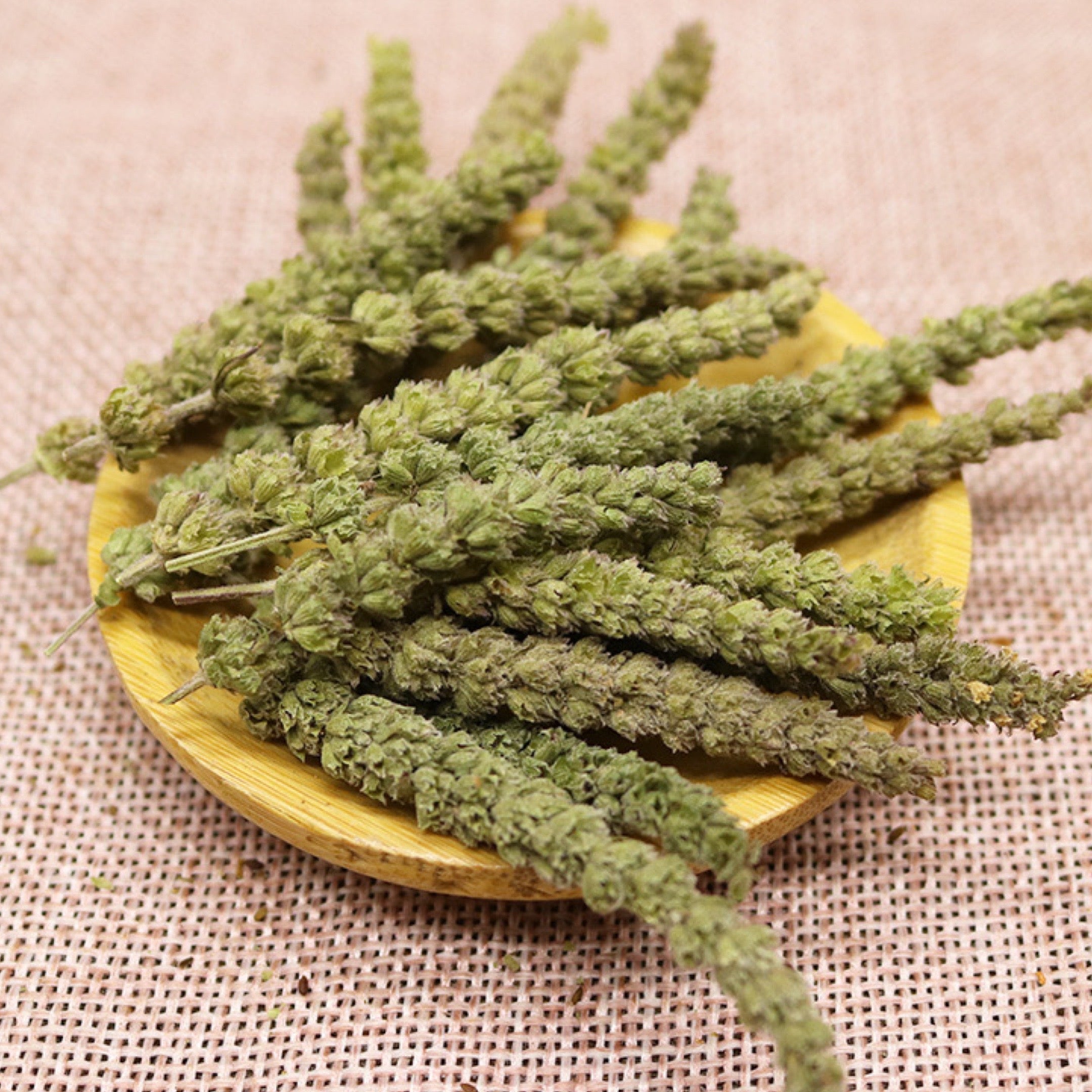


Platycodon Root (Jie Geng) is traditionally used in Chinese herbal medicine to open and disseminate Lung Qi, transform Phlegm, and support throat comfort. In TCM, it is commonly included in formulas for cough, white or difficult-to-clear phlegm, chest congestion, throat irritation, and impaired movement of Lung Qi.
Platycodon Root (Jie Geng) is traditionally used in Chinese herbal medicine to open and disseminate Lung Qi, transform Phlegm, and support throat comfort. In TCM, it is commonly included in formulas for cough, white or difficult-to-clear phlegm, chest congestion, throat irritation, and impaired movement of Lung Qi.
Fineleaf Schizonepeta All Grass (Jing Jie) is traditionally used in Chinese herbal medicine to release the exterior, disperse Wind, and support the body's response to early external patterns. In TCM, it is commonly included in formulas for Wind-Cold cough, itchy throat, mild chills, nasal congestion, sensitivity to wind, and early seasonal respiratory discomfort.
Japanese Stemona Root (Bai Bu) is traditionally used in Chinese herbal medicine to moisten the Lung, descend Lung Qi, and support relief from coughing. In TCM, it is commonly included in formulas for dry, persistent, spasmodic, or recurring cough with little or difficult-to-clear phlegm.
Cynanchum Root (Bai Qian) is traditionally used in Chinese herbal medicine to descend Lung Qi, transform Phlegm, and support comfortable breathing. In TCM, it is commonly included in formulas for cough with white phlegm, chest fullness, difficult-to-clear mucus, wheezing, and Lung Qi obstruction.
 honey is the only binding agent
no artificial fillers or ingredients
herbs harvested at the height of potency
Our herbal supplements are made with natural honey as the binder. Honey can support the lungs, intestine, spleen, and stomach; It works as a natural preservative with antibacterial and healing properties. Unlike other herbal supplement companies that use starch, magnesium, and other chemical substances as binders for their supplements, we only use 100% honey. We also avoid using vegetable capsules because they require chemical components to form the capsule shape.


The herbs in our herbal pill blends are harvested at the height of their potency and they are substantially more expensive than less potent herbs that were harvested in the pre-or post-season, but in our view, there is no substitute for premium quality.
Over five generations we have collected, tested and refined Chinese herbal formulas that themselves draw from 3,000 years of experience of Traditional Chinese Medicine. Traditional Chinese Medicine is a profound pathway to create the life you were born to live. It's a timeless bridge that can initiate and support change and growth in any and every life dimension: physical, mental, emotional, and spiritual.

“Good Health is crucial for our overall well-being. It encompasses physical, mental, and emotional aspects, and it's important to prioritize taking care of ourselves to lead a fulfilling life. Emphasizing prevention over cure is paramount for maintaining this balance. Without health, life can become incredibly challenging. It affects our ability to pursue our goals, enjoy our relationships, and experience daily life to the fullest. Good health forms the foundation for everything else we want to achieve and experience.” - Ann Tam
Click below for
If you feel skeptical or unsure of Chinese herbal remedies, I could hardly blame you. I wasn't a believer either until my daughter grew very sick and my father (the 4th generation herbalist) helped her get better with herbs.
I was born into a family of herbalists. My father, my grandfather, my great-grandfather, great-great grandfather were all herbalists. I represent the 5th generation in this long lineage dating back to Imperial China.
When I was three or four years old, I started to learn herbal songs and how to identify herbs. As I got older, I was taught how to process the herbs while working in my dad’s clinic in Vietnam. After we immigrated to the United States, my dad asked me if I wanted to pursue a career in TCM as an herbalist or acupuncturist. I said, “No, just leave me alone, Dad. I will find something I enjoy doing for work.” So, he left me alone to find my own way.
I wanted nothing to do with herbal medicine until I gave birth to my second daughter, Catherine, who was born with severe gastric reflux. When Catherine was 10 days old, I had to take her to the ER for IV injections into her little hand because she couldn’t keep milk down. Besides vomiting, she also was having diarrhea. Catherine was losing nutrition from both ends, so her tiny body was shrinking. At that time my dad warned me, “She needs to be treated with herbal medicine, otherwise she will have seizures later on.” I didn’t fully understand what my dad was talking about, so I ignored him.
My daughter got so ill that she could only take half an ounce of milk per hour. Before feeding her, I would use a syringe and shoot Zantac into her mouth to lessen the vomiting. As time passed, she needed milk more often, and consequently more Zantac. By the time Catherine was 8 months old, she needed to be fed and medicated 11 times a day.
I could hardly sleep, eat, shower or rest. Even at night, I had to drape my daughter over my shoulder for her to sleep. If I put Catherine down, she would vomit. I barely had time to squeeze in a 5-minute shower once or twice a week for myself. I was exhausted, but what could I do? I had to care for my daughter and do my best to survive each day with the hope that she would get better or at the very least her condition would not worsen.
Catherine had to wear a turtleneck with two sweaters along with a baby cap and scarf to be outside during the heat of summer, even when temperatures were 100 plus degrees. If I didn’t cover her up, she would have a runny nose, cough, and non stop vomiting. How will she be able to go to school or anywhere with air conditioning?
One day we went to a Vietnamese pho restaurant. After I set Catherine down into the high-chair, I turned around and adjusted my chair. Then I heard a woman’s shout, “Look at her!” I looked in the direction she pointed. It was Catherine…her eyes rolled up and her entire body stiff and shaking with fluid coming out of her mouth. Someone said, “Squeeze some lemon into her mouth.” I did it without hesitating and Catherine’s body relaxed.
We rushed her to the ER. For 3 days she was in the NICU where they monitored her brain. The doctors told me I was lucky because my daughter’s seizure didn’t last for more than 3 minutes which would have damaged her brain. After that I always carried a piece of lemon because I had no idea when my baby girl might have another seizure.
The seizures started to come weekly, so the doctor prescribed anti-seizure medication. Catherine wasn’t even 1 year of age, and already she was taking Zantac 11 times plus anti-seizure medicine 3 times a day. It was nearly impossible to administer the anti-seizure medicine because whenever I took out the syringe, she would cry and start vomiting.
I took Catherine to see a specialist at CHOC. I asked, “Doctor, have you ever seen any infant with this condition get well?” The doctor replied, “It depends. Some will grow out of it, but some don’t. If they don’t, then they will have to take medication for the rest of their life.”
“What do you mean by grow out of it?” The doctor explained that Catherine might get better by herself as she got older.
My mind was racing. “All this time the prescribed medication has not been treating her stomach?” The doctor said, “No, it only helps to guide the food down, so she won’t vomit it back up. That’s why you have to give it to her before the feeding.”
“Well, what if she doesn’t grow out of it?” In that case, Catherine will be dependent upon medication for the rest of her life. The doctor further informed me that she too was born with gastro reflux and is still taking medicine for the condition.
Her statement was like lightning in my brain. If the doctor can’t even treat herself for gastro reflux, how can she help my daughter? Seeing the futility of my path, I turned to my dad for help.
My dad advised me to stop all western drugs and to give her an herbal prescription 3 times a day. Administering medicine 3 times instead of 14 times a day to Catherine was a godsend to me. Even though it sounded too good to be true, I figured that I could still give Zantac to Catherine if she didn’t get better or continued to vomit.
After one month of herbs 3 times a day, Catherine vomited less and less. To test Catherine, I let her cry to see if she would vomit. She didn’t, so I knew she was getting better. After another month of herbal medicine, Catherine was able to wear less clothing without getting a runny nose, coughing, or vomiting. After 3 months of herbal formulas, she stopped having episodes of gastro reflux and seizure. Catherine will enjoy a normal, healthy life.
Because of Catherine’s dramatic recovery, I was sold on Chinese medicine and asked my dad to treat me. I fainted very easily, especially during the winter. After a few months of herbal formulas, I have never fainted again.
I started to have time to think and tried to understand why a piece of lemon helps to relax the muscles and stop a seizure. Lemon is a common citrus, yet it has magical powers that we don’t understand and underestimate. I wanted to learn more and find answers, so I decided to go to China which has a long history of herbal medicine. I went to TCM schools in China and Hong Kong and worked in the TCM hospitals to learn from the best herbal doctors in the world.
When I was there, I knew one day I would want to become an herbalist, but how can I get a steady supply of high-quality herbs. My dad and I backpacked across China and visited many farmlands. We interviewed farmers to grow herbs for us. Our products are used with the highest quality herbs that have been harvested at the height of their potency. They are substantially more expensive than less potent herbs that were harvested in the pre- or post-season.
After I came back to the United State, I worked with my dad and learned from his experiences and studied the formulas that our ancestors passed down. What I have been through helped me to understand the importance of health. Without health, don’t even talk about career, beauty, education, freedom, etc. I now have worked with many families who have suffered as I have. Their endearing appreciation drives me to work harder.
Our namesake "Silkie" is a Chinese breed of chicken that is well known for its calm and friendly temperament. They are gentle and caring and make wonderful mothers. A Silkie loves nothing more than brooding a cluster of eggs, whether they are hers or not, even if they are "duck eggs". We share the same outlook and care for our clients the same way we care for our own family.